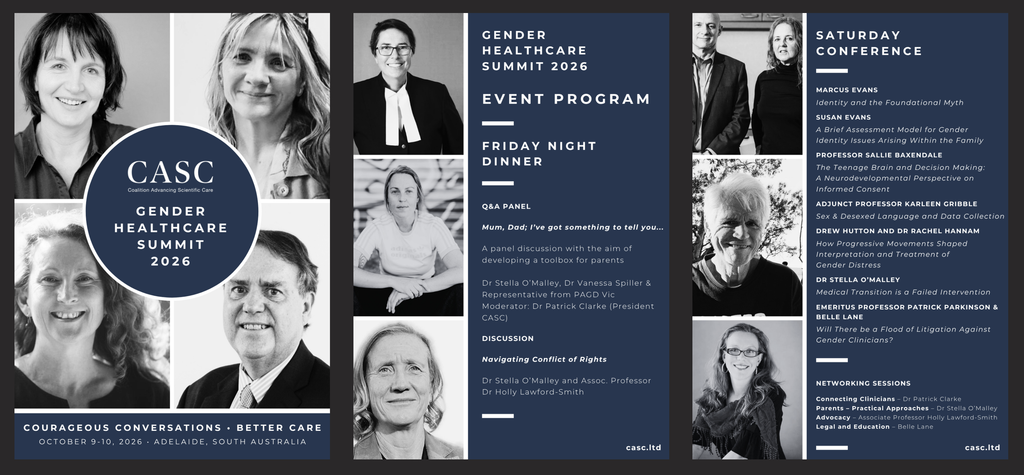
The second day of the Coalition for Advancing Scientific Care (CASC) Gender Healthcare Summit opened early in Adelaide under the theme Courageous Conversations, Better Care. The programme examined clinical assessment, adolescent development, medical outcomes, health data and the legal responsibilities involved in treating children and young people experiencing gender-related distress.
The CASC convenor set the tone by comparing the current debate in paediatric gender medicine with the experience of Dr Frances Kelsey, the American physician and pharmacologist who resisted pressure to approve thalidomide in the United States because the evidence for its safety was inadequate.
He argued that questions about evidence have too often been treated as hostility in paediatric gender medicine. Referring to the 2024 Cass Review and changes in clinical policy overseas, he described the forthcoming consultation on the NHMRC’s draft interim advice on puberty blockers as Australia’s “Frances Kelsey moment”.
His call was for thorough individual assessment, attention to coexisting conditions, psychological support, parental involvement, better services for detransitioners and long-term follow-up. Good intentions, he argued, are not a substitute for reliable evidence and honest acknowledgement of uncertainty.
Sue and Marcus Evans: Understanding the child and family
Former Tavistock clinicians Sue and Marcus Evans joined by video link from the United Kingdom. Both were involved in raising concerns about the former Gender Identity Development Service (GIDS) at the Tavistock and Portman NHS Foundation Trust in London.
Sue Evans outlined an assessment model focused on the whole family, rather than treating a young person’s stated gender identity in isolation. She observed that helping parents can be one of the most difficult parts of the work, particularly when they feel traumatised by what is happening to their child and by their experiences with services.
Her approach is to explore family dynamics and the young person’s wider circumstances through an open, holistic assessment.
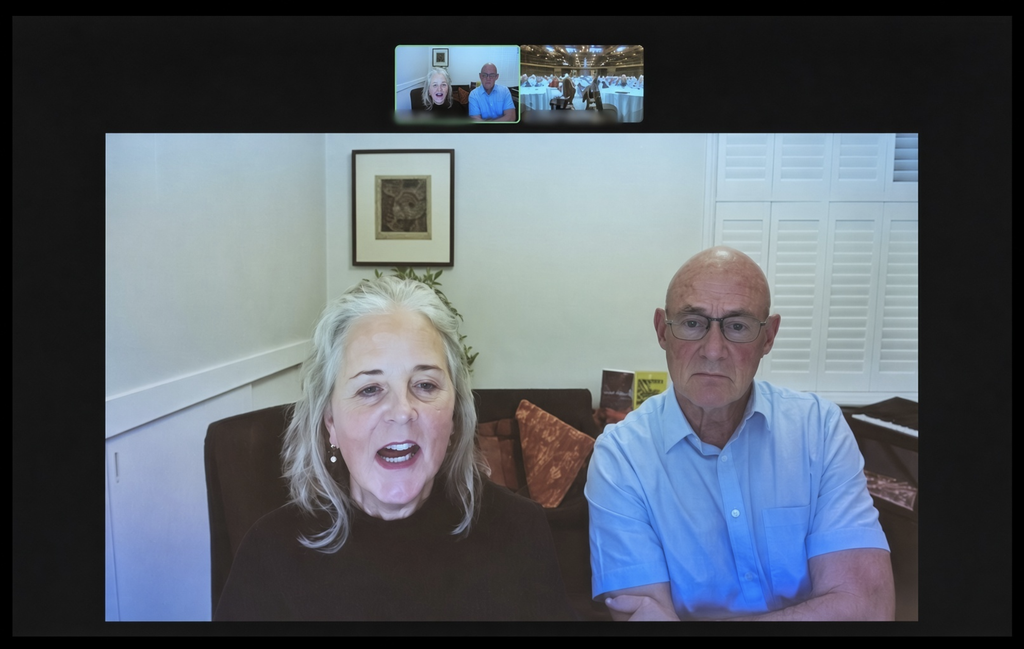
Marcus Evans spoke about identity and what he called the foundational myth. He described children carrying deep grievances and self-hatred that can become entrenched, making exploration of their beliefs increasingly difficult.
In psychotherapy, he explained, his focus is on understanding the young person: how they see the world and who they are, rather than beginning with gender. He views gender dysphoria as a symptom that needs to be understood in context.
Evans also described gender-affirming care as a form of “pain avoidance”. In his view, the idea of transitioning can become an idealised escape from distress or dissatisfaction with the body. His position was that clinicians need to understand what lies behind a young person’s distress before assuming that medical intervention is the appropriate response.
Their presentations emphasised the importance of allowing time for assessment and ensuring that clinicians can question a treatment pathway without being marginalised for doing so.
Dr Jillian Spencer: Recognising clinical courage
CASC presented its White Mouse Award to Queensland child psychiatrist Dr Jillian Spencer, who was unable to attend in person because of illness.
Dr Spencer was suspended from Queensland Children’s Hospital in 2023 after raising concerns about the state’s gender service. She later reached a legal settlement, received a public apology from the hospital and had an investigation by the Australian Health Practitioner Regulation Agency dropped.
The hospital acknowledged the importance of clinical care based on the best available research and the child’s best interests, including comprehensive assessment of coexisting conditions and other mental health concerns.
The award recognised Dr Spencer’s persistence in raising questions about clinical practice and child safety. Her case also highlighted a broader issue: whether healthcare professionals can question established policy and advocate for comprehensive assessment without facing disproportionate professional consequences.
Professor Sallie Baxendale: The teenage brain and informed consent
Professor Sallie Baxendale, a neuropsychologist at University College London, examined informed consent from a neurodevelopmental perspective.
Her presentation focused on adolescent brain development and the implications for decisions involving potentially irreversible medical interventions. She argued that young people’s capacity to weigh risks and long-term consequences needs to be considered carefully, particularly when they are distressed and seeking a way to feel accepted.
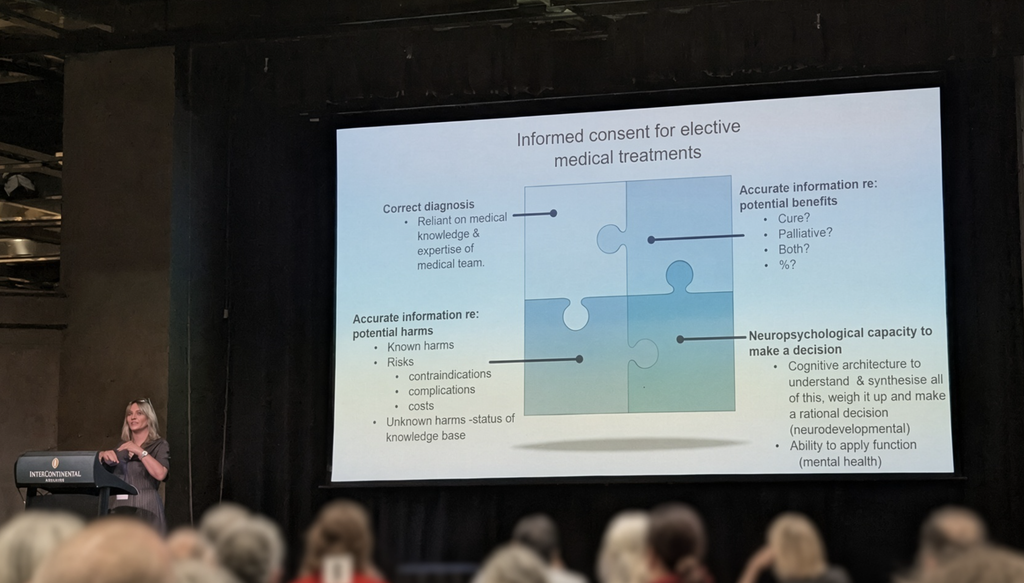
Baxendale discussed research on reward-seeking, peer influence and the developing capacity to consider alternative outcomes. Adolescents, she argued, may place greater weight on immediate needs and social acceptance than on consequences that seem distant, such as possible future fertility implications.
She also questioned claims that puberty blockers are “safe and reversible”, arguing that an absence of evidence demonstrating harm should not be confused with evidence that a treatment is safe. She emphasised the importance of puberty as a stage of neurodevelopment and called for greater attention to the possible consequences of interrupting it.
Baxendale also highlighted the need to assess coexisting conditions, including autism, and to understand each young person’s circumstances rather than assume that medical transition is the appropriate response.
She argued that detransitioners have an important role in informing clinical practice because their experiences can help identify what information, support and assessment might have been beneficial before treatment began.
Her presentation returned to a fundamental question: what does genuinely informed consent look like when a young person is still developing and considering interventions with potentially lifelong consequences?
Adjunct Professor Karleen Gribble: Sex, language and health data
Adjunct Professor Karleen Gribble examined what she described as the “desexing” of language and data collection in health services.
She stressed the importance of plain language in health communication, particularly in midwifery and maternal care. She questioned whether terms such as “pregnant people” and “people with a cervix” necessarily make public health messages clearer, especially for people with limited health literacy or English proficiency.
Her argument was that health communication must make clear who the information is intended for, while remaining accurate and understandable.
Gribble also raised concerns about replacing sex-based information with gender identity in health records and research. She argued that accurate sex-disaggregated data is essential for identifying risks, evaluating outcomes and designing appropriate services. Sex and gender identity may both be relevant in particular contexts, but they are not interchangeable measures.
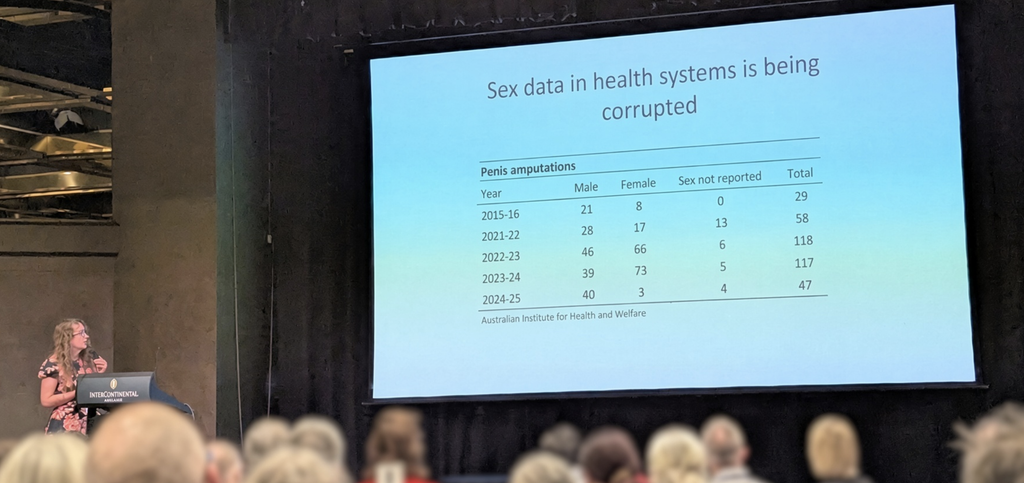
One striking example Gribble discussed was Australian Institute of Health and Welfare (AIHW) hospital data recording 167 penis amputations among patients classified as female over the ten financial years from 2015–16 to 2024–25. Gribble used the figure to illustrate her concerns about how health statistics can become difficult to interpret when the categories used to record sex and gender are not clear. The underlying data and its coding need to be considered when interpreting what the figure represents.
Her broader point was that reliable health information depends on recording the characteristics relevant to the question being asked. If sex is not consistently recorded, important comparisons between female and male patients may become difficult or impossible.
Drew Hutton and Dr Rachel Hannam: Politics, psychology and diagnostic assessment
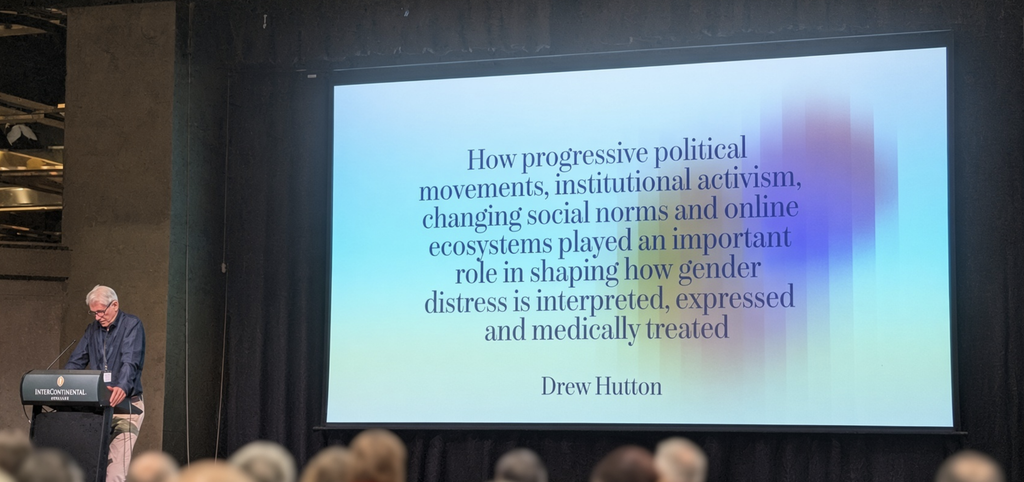
In the afternoon, Australian Greens co-founder Drew Hutton and Brisbane-based psychologist Dr Rachel Hannam examined how progressive movements have influenced the interpretation and treatment of gender distress.
Hutton reflected on his experience within the Greens, including his expulsion after defending internal debate on gender policy. He later had his membership reinstated through legal action before resigning from the party.
He argued that identity politics had become particularly influential among professional classes and warned that some progressive movements had come to treat the challenging of established boundaries as a virtue. In his view, this can undermine social cohesion and make open scrutiny of ideas increasingly difficult.
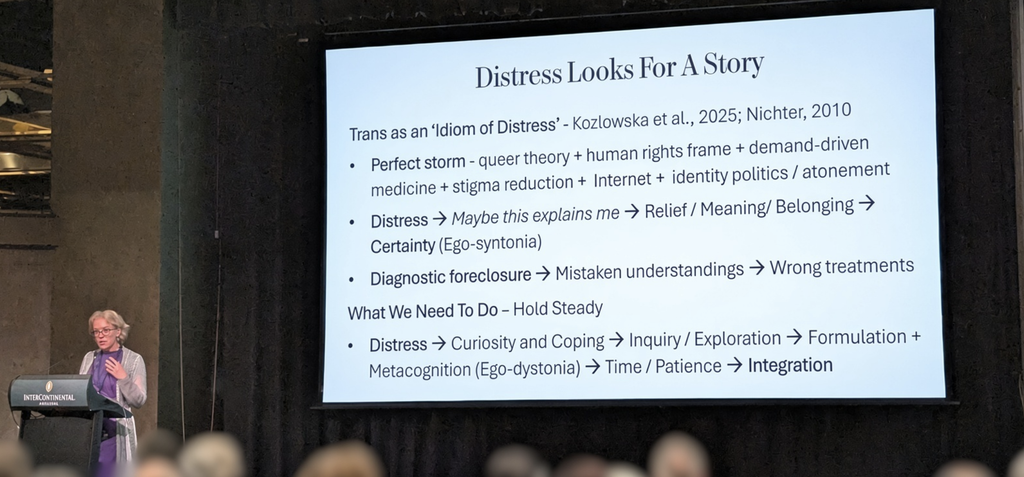
Hannam approached the issue from a psychological perspective. She argued that distress often finds expression through a particular story or explanation, and that clinicians can make mistakes when they settle too quickly on one explanation for a young person’s difficulties.
She called this diagnostic foreclosure: reaching a conclusion before adequately exploring other possible contributing factors.
Hannam warned that an emphasis on affirmation can discourage the curiosity necessary for sound assessment. She argued that protecting a young person from shame should not mean abandoning the questions needed to understand their distress.
Her message was that patience, curiosity and the ability to tolerate distress are not failures of care. They are part of care.
Both presentations raised questions about what happens when political or social pressures make certain ideas difficult to examine, and whether clinicians can remain open to different explanations for a young person’s difficulties.
Stella O’Malley: How should medical transition be judged?
Psychotherapist Stella O’Malley’s keynote argued that medical transition should be judged by long-term outcomes, rather than patient satisfaction alone.
She traced the history of medical interventions for people experiencing gender distress before turning to the evidence used to evaluate contemporary treatments.
O’Malley questioned the reliance on self-reported satisfaction in studies of gender-related interventions. She argued that a patient reporting satisfaction does not, by itself, establish that treatment has improved their overall wellbeing.
She urged the audience to consider broader measures, including employment, housing stability, relationships, social functioning, mental health service use, suicide attempts and mortality.
O’Malley discussed long-term Swedish research and more recent Finnish research involving young people, interpreting the findings as reasons to question whether the benefits of medical transition have been adequately demonstrated. She argued that limitations in the evidence on adult treatment should have prompted greater caution before similar approaches were extended to children and adolescents.
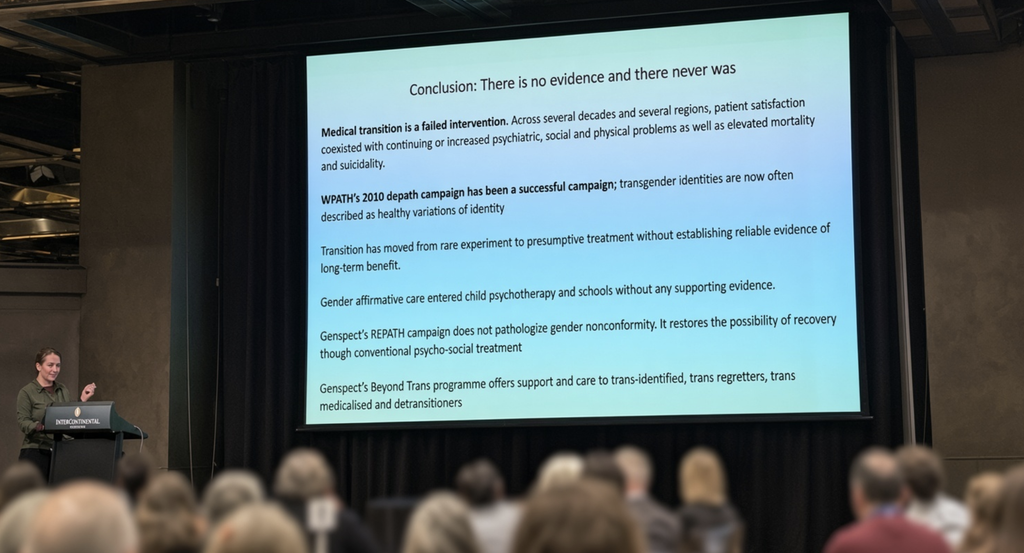
Her conclusion was stark: she described gender transition as a “failed medical intervention”. That is her assessment of the evidence she presented, and the studies she cited warrant examination in their own right, including their methods, populations and limitations.
The underlying question she raised was an important one for medicine: how should treatment success be defined, and are long-term health and functioning being measured as carefully as patient-reported satisfaction?
Professor Patrick Parkinson and barrister Belle Lane: Consent and the prospect of litigation
The final presentations brought the discussion into the legal arena. Professor Patrick Parkinson, former Dean of Law at the University of Queensland, and Melbourne-based barrister Belle Lane examined informed consent, parental responsibility and the possibility of future litigation involving clinicians who treat children experiencing gender distress.
Parkinson argued that Australian law requires agreement from both parents, or a court order in relevant cases, before certain medical treatments for minors can be provided. He warned that clinicians who fail to meet applicable legal requirements may face regulatory complaints or civil claims.
The precise legal obligations depend on the treatment and circumstances, but his broader message was that practitioners need to understand their responsibilities and ensure that assessments, decisions and consent are properly documented.
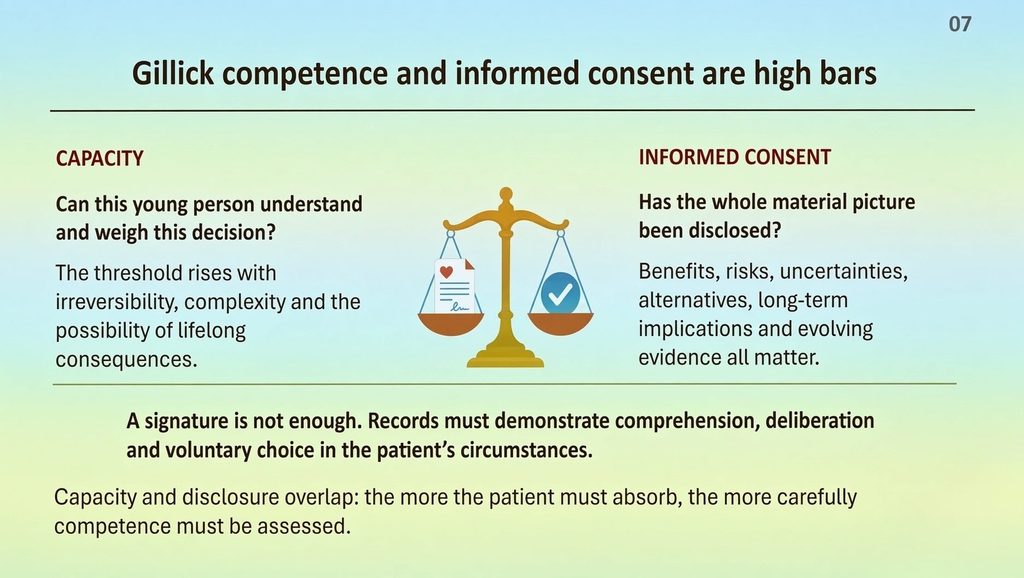
He also questioned whether young people and their families are receiving sufficient information about the potential long-term consequences of medical transition, including the possibility of further interventions and their associated complications.
Lane discussed how court proceedings can bring clinical records and decision-making processes under scrutiny. She described concerns about the absence of comprehensive biopsychosocial assessments in some cases and insufficient exploration of the factors contributing to a young person’s distress.
The discussion highlighted the importance of examining what information was gathered, which alternatives were considered, what was communicated to families and how treatment decisions were reached.
A central question was how parents and young people can give informed consent if material uncertainties, possible harms and alternative approaches are not fully discussed.
Consent is not simply a form to be signed. It depends on understanding the available information, including what remains uncertain.
Concluding the day
After the formal programme, attendees had time for networking and further conversations. I also had the opportunity to say hello to Stella O’Malley, who kindly signed my copy of The Gender Framework, the evidence-based guide she co-authored.
Across the day, speakers approached the issues from different disciplines, including psychology, neurodevelopment, public health, medical outcomes and family law. Yet several themes recurred: the need for thorough assessment, reliable evidence, honest communication about uncertainty, appropriate parental involvement and accountability in clinical practice.
For Women Speak Australia, these are important questions in any discussion of children’s healthcare. Good medicine requires more than good intentions. It requires sound assessment, reliable evidence, genuine informed consent and a willingness to revisit established practice when the evidence warrants it.
The CASC summit provided an opportunity to hear from clinicians, researchers, lawyers and families who believe these questions deserve closer scrutiny. The challenge is to ensure that debate leads to careful examination of the evidence and care that genuinely serves the long-term interests of children and young people.