Introduction
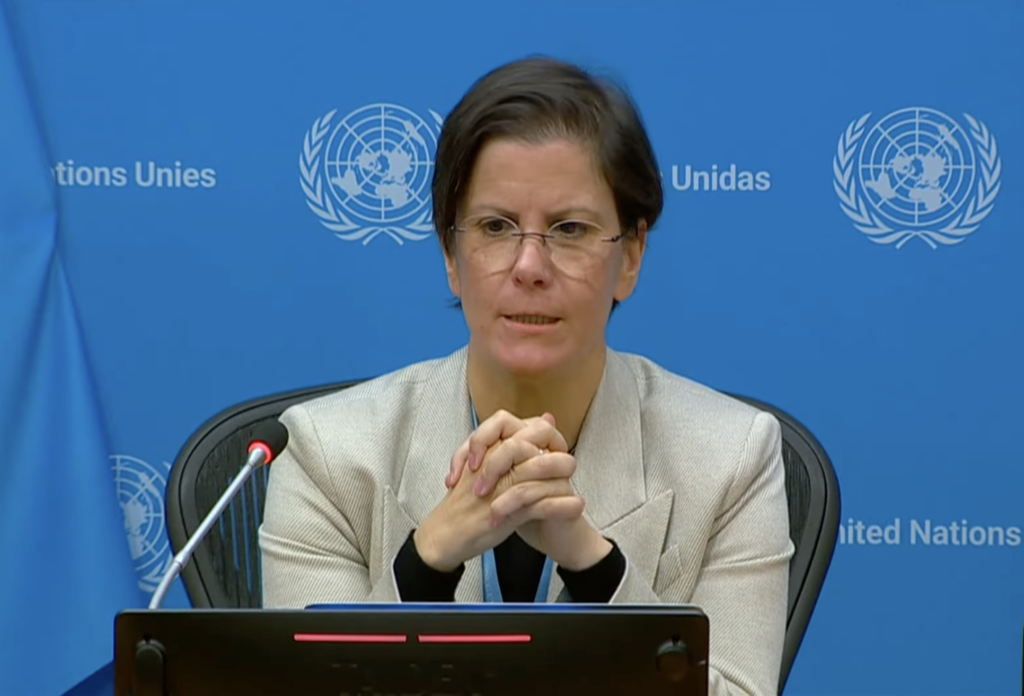
In July 2025, UN Special Rapporteur Reem Alsalem issued her thematic report The different manifestations of violence against women and girls in the context of surrogacy (A/80/158). She presented the report to the UN General Assembly Third Committee on 10 October 2025.
The report does not treat surrogacy primarily as a family-building service in need of better rules. It examines the practice as a site of violence, exploitation and commodification. Its conclusion is unusually direct:
“The practice of surrogacy is characterised by exploitation and violence against women and children, including girls.”
Rather than confining that claim to commercial markets or weakly regulated jurisdictions, Alsalem questions whether surrogacy itself can be reconciled with the rights, dignity and wellbeing of women and children.
This is particularly relevant to Australia. Commercial surrogacy is prohibited, while altruistic surrogacy is permitted under state and territory legislation. The Australian Law Reform Commission is currently reviewing those laws. The report therefore poses a basic policy question: can stronger regulation adequately address the risks, or do some of those risks arise from the practice itself?
Summary of the report
Alsalem identifies economic, psychological, physical and reproductive violence in surrogacy arrangements. She also examines trafficking, slavery-like control, and the sale of children.
The report argues that surrogate mothers often face significant power imbalances with intended parents, agencies and medical providers. Contracts may affect decisions about pregnancy, childbirth, movement, diet and medical treatment. Poverty, inequality and limited alternatives, it says, can undermine the meaningfulness of consent.
Children born through surrogacy are treated as independent rights-holders. The report raises concerns about planned separation from the woman who gives birth, identity and access to origins, nationality, abandonment, weak screening of intended parents, and decisions imposed on the pregnancy before birth.
Its policy conclusion is abolitionist. Alsalem recommends that States “take steps towards eradicating surrogacy in all its forms” and “work towards adopting an international legally binding instrument prohibiting all forms of surrogacy.” Pending abolition, she calls for demand-reduction measures modelled on the Nordic approach to prostitution: penalise buyers, clinics and agencies; decriminalise surrogate mothers; prohibit advertising; and provide exit support.
Strengths of the report
1. It starts with the woman who is pregnant
A central contribution of the report is its refusal to treat the pregnant woman as a service provider or “gestational carrier.” Alsalem uses “surrogate mother” deliberately, arguing that sex-neutral language reduces women to a reproductive function.
The report asks what pregnancy, childbirth and separation mean for the woman whose body is involved. That brings sex, reproductive capacity, bodily autonomy and economic inequality into the centre of the discussion.
2. It challenges the commercial/altruistic distinction
This is the report’s most important implication for Australia.
Australia prohibits payment for carrying a child while allowing reimbursement of expenses. Alsalem argues that these distinctions are “often blurred,” and that few regulated systems are genuinely non-commercial. Surrogacy arrangements, she writes, are “almost invariably commercial” in nature.
The issue is therefore not simply whether a fee is formally paid. It is whether unequal circumstances, contracts and power imbalances can still prevent genuinely free and informed consent.
3. It takes consent seriously — and then limits it
The report does not dismiss consent. It asks when consent is real.
In the report, Alsalem states that “consent alone does not render surrogacy ethical.” Consent, she notes, does not legitimise trafficking, slavery or torture.
At an October 2025 UN question-and-answer session on the report, she put the same point more sharply:
“Consent is invalid when it is used to justify exploitation, abuse and violence.”
She also argued that many surrogate mothers may not fully understand the medical risks or the implications of the contracts they sign. That matters for Australia’s altruistic model, which depends heavily on counselling, independent legal advice and the assumption of voluntary agreement.
4. It treats children as independent rights-holders
The child is not treated as the desired product of an agreement between adults. Alsalem emphasises that international law does not give any person a right to a child.
She also argues that commercial surrogacy “constitutes the sale of children,” because the purpose of the arrangement is the transfer of the child for payment or other consideration. Even where an arrangement is labelled altruistic, she says reimbursement often functions as compensation.
The report further states that “no regulatory framework can fully prevent the serious psychological harm that may result from the separation process.” That claim is one of the report’s hardest: it suggests that the planned removal of the newborn is not a problem that better contracts can solve.
5. It rejects regulation as a sufficient answer
This is the report’s main challenge to current Australian policy.
Alsalem argues that existing evidence does not support the claim that regulation and oversight prevent trafficking or reduce harm. At the October 2025 UN Q&A she said:
“Regulation and legalization have not proven to reduce demand. They have not proven to safeguard surrogate mothers and children against abuse and exploitation.”
If that is accepted, the policy problem is not only how to design a nationally consistent altruistic system. It is whether the practice should continue.
Limitations and caveats
The report should still be read critically.
Its evidence base is mixed. It draws on academic studies, consultations, submissions, media reports and case studies from many jurisdictions. Some claims rest on limited or contested research. Alsalem’s conclusions should not be treated as established scientific consensus.
Many of the gravest examples come from commercial markets with legal and economic conditions very different from Australia’s. Those examples demonstrate real risks. Their application to tightly regulated domestic altruistic arrangements is a matter for argument, not automatic transfer.
Research on outcomes for children born through surrogacy is also contested. The report raises concerns about preterm birth, attachment and identity. Other studies report more positive outcomes. Further research is needed.
Finally, abolition is a policy recommendation under the Special Rapporteur’s mandate. It is not a binding determination of international law, and it is not the settled position of all UN treaty bodies. Some of the parentage recommendations — including opposition to recognising certain foreign surrogacy arrangements — are legally and politically difficult, especially for children already born.
The report is best understood as a human-rights analysis undertaken under a violence-against-women mandate, rather than as a comprehensive review of all empirical, ethical and legal perspectives on surrogacy.
Implications for Australia
The report leaves Australian policymakers with several questions.
First, is the absence of a formal fee enough to eliminate exploitation? Alsalem’s answer is no. If arrangements are “almost invariably commercial,” the altruistic label may describe the statute more accurately than the practice.
Second, can counselling, legal advice, expense caps and court transfer of parentage remove the underlying imbalance between the woman who is pregnant and the adults who commissioned the pregnancy? The report’s answer is that regulation has not been shown to do so.
Third, should the child’s rights to identity, origins, nationality and protection be considered independently of adult intentions? The report says yes, and it rejects the idea that a desire to be a parent creates a right to another person’s body.
Fourth, if commercial surrogacy is already prohibited because of the risk of exploitation, what is the remaining justification for permitting altruistic surrogacy? The report invites a more fundamental option than expanding access: prohibition.
Conclusion
Alsalem’s report does not settle every empirical dispute about surrogacy. Its importance is that it changes the question.
Australia has chosen to prohibit commercial surrogacy and regulate altruistic arrangements. The Special Rapporteur argues that this distinction is weaker than it appears, that consent under inequality is not a complete answer, and that no amount of safeguarding can fully remove the harm of using one woman’s pregnancy to produce a child for others.
Her own recommendation is abolition:
States should “take steps towards eradicating surrogacy in all its forms.”
Whether Australia accepts that conclusion or not, the report makes it harder to treat more regulation as the only serious response. If a practice requires extensive legal safeguards in order to be considered acceptable, the question is no longer simply how to regulate surrogacy. It is whether it should be permitted at all.