Surrogacy is legal in every Australian state and territory, yet Australia has no single national surrogacy law. Instead, it is regulated primarily through separate state and territory legislation.
There is one broad point of agreement: commercial surrogacy is prohibited across Australia, while altruistic surrogacy is permitted. In an altruistic arrangement, a surrogate may have certain expenses reimbursed but cannot receive payment or make a profit from carrying the child. The precise rules, safeguards and eligibility requirements differ between jurisdictions.

This distinction reflects, in part, concerns about exploitation. Australian governments recognise that financial incentives can create risks for women who act as surrogates, and legislation therefore seeks to regulate the practice while protecting the surrogate, the child and the intended parents.
But this raises a more fundamental question:
If surrogacy requires such extensive safeguards, can regulation ever fully remove the risks and potential for exploitation inherent in the practice?
Tasmania: A highly regulated model
Tasmania provides a useful case study.
The Surrogacy Act 2012 prohibits commercial surrogacy and establishes a detailed framework for altruistic arrangements. It includes requirements concerning eligibility, counselling, independent legal advice, the reimbursement of expenses and the eventual transfer of legal parentage.
Importantly, the legislation recognises that a surrogacy agreement cannot simply take control of a woman’s pregnancy away from her. The surrogate retains decision-making rights concerning her pregnancy and childbirth.
In other words, the law recognises that pregnancy and childbirth cannot be reduced to an ordinary contractual transaction.
Yet the law still permits one woman to undertake pregnancy and childbirth for the purpose of enabling another person or couple to become parents.
Even within this carefully regulated framework, the fundamental arrangement remains the same.
Can “altruistic” surrogacy be free from exploitation?
Calling an arrangement “altruistic” does not, by itself, resolve the question of exploitation.
A woman may not receive a fee, but she is still undertaking pregnancy, with its physical demands, medical interventions and potential risks, for the benefit of intended parents. Expenses may be reimbursed, but the underlying arrangement remains: one woman undertakes pregnancy and childbirth so that another person or couple can become parents.
The Australian Law Reform Commission is currently reviewing Australia’s surrogacy laws. Its review has identified concerns and inconsistencies in the existing framework and is considering options including greater national consistency, stronger safeguards and improved support for surrogates.
One possible response is therefore to make domestic altruistic surrogacy more accessible and better regulated.
There is, however, another possible response.
Regulation — or abolition?
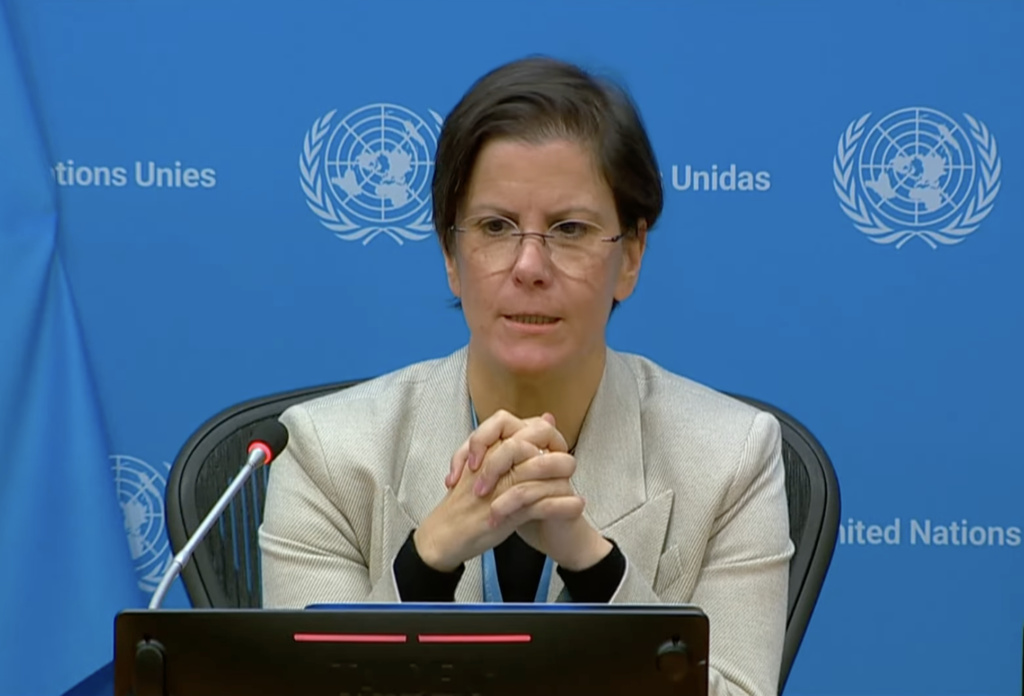
The UN Special Rapporteur on violence against women and girls, Reem Alsalem, has examined surrogacy through the framework of exploitation, commodification and violence against women. In her 2025 thematic report, The different manifestations of violence against women and girls in the context of surrogacy (A/80/158), she questions whether regulation can adequately address the structural inequalities and risks associated with surrogacy.
This raises an important question for Australia:
Should the goal be to make surrogacy more accessible and better regulated — or should we reconsider whether surrogacy should be permitted at all?
Women Speak Australia takes the latter position.
We believe that the desire to become a parent, however genuine, does not create a right to another person’s body or reproductive capacity. Pregnancy and childbirth involve significant physical and personal consequences for the woman who undertakes them.
The issue is therefore not simply whether surrogacy is commercial or altruistic. It is whether a woman’s body should be used to produce a child for someone else in the first place.
If the law requires extensive safeguards to protect women and children from exploitation, perhaps the question we should be asking is not how to regulate surrogacy better, but whether it should be permitted at all.