Women across Australia are raising concerns about fairness and safety in female sport. Reports continue of trans-identified males competing in women’s and girls’ categories — from community leagues to semi-competitive levels. Many women say they signed up to compete against other women, not in mixed or self-ID-based competitions.
Australian law provides clear protections for single-sex categories in competitive sport. Yet policy guidance, club practices, and organisational culture often appear to prioritise broad inclusion over these legal safeguards. This creates inconsistency: national federations sometimes rely on the law to maintain fairness, while community-level sport frequently does not.
The Legal Framework
The primary legal protection is found in the Sex Discrimination Act 1984 (Cth). Section 42 provides a permanent exemption:
Section 42(1): Nothing in Division 1 or 2 renders it unlawful to discriminate on the ground of sex, gender identity or intersex status by excluding persons from participation in any competitive sporting activity in which the strength, stamina or physique of competitors is relevant.
The federal SDA s42 applies nationwide and is the strongest, most consistent protection. State and territory laws generally do not override it and often provide parallel or additional exemptions. Organisations must comply with both federal and applicable state or territory laws.
What the Law Allows — and What It Doesn’t Require
Section 42 permits sporting organisations to restrict participation in certain competitive categories where strength, stamina, or physique are relevant. However, the exemption is permissive rather than mandatory. Sporting organisations remain free to adopt more inclusive policies, provided they believe those policies meet their legal obligations. The debate therefore is not whether the law allows female-only categories — it clearly does — but whether sporting organisations are willing to use those protections.
Sport Australia and the Australian Human Rights Commission have produced guidelines that promote an “inclusion-first” approach. These documents are not legally binding and cannot override the Sex Discrimination Act.
What is Happening on the Ground
The following examples illustrate concerns raised by women in two different sports.
Football on the Sunshine Coast
In the Sunshine Coast women’s football leagues, including the higher-level FQPL3 competition, multiple women have raised concerns about trans-identified males competing in women’s and Masters categories. One experienced 44-year-old player described the situation:
“There are 4, possibly 5 men playing in the Sunshine Coast women’s community football league and one in the FQPL3 league… He is huge in comparison to the girls. He plays in goals and is about 100kg and stands at about 6 foot… He can kick almost 3/4 of the field as opposed to a woman keeper who can barely make the 1/2 line.”
She noted the physical disparity is stark:
“I’m 5’6 and weigh 58kg and most of the girls in my team are smaller than me. So he’s almost double the weight and at least a head and shoulders taller than most… I signed up to play against women in a women’s league. Not a mixed league.”
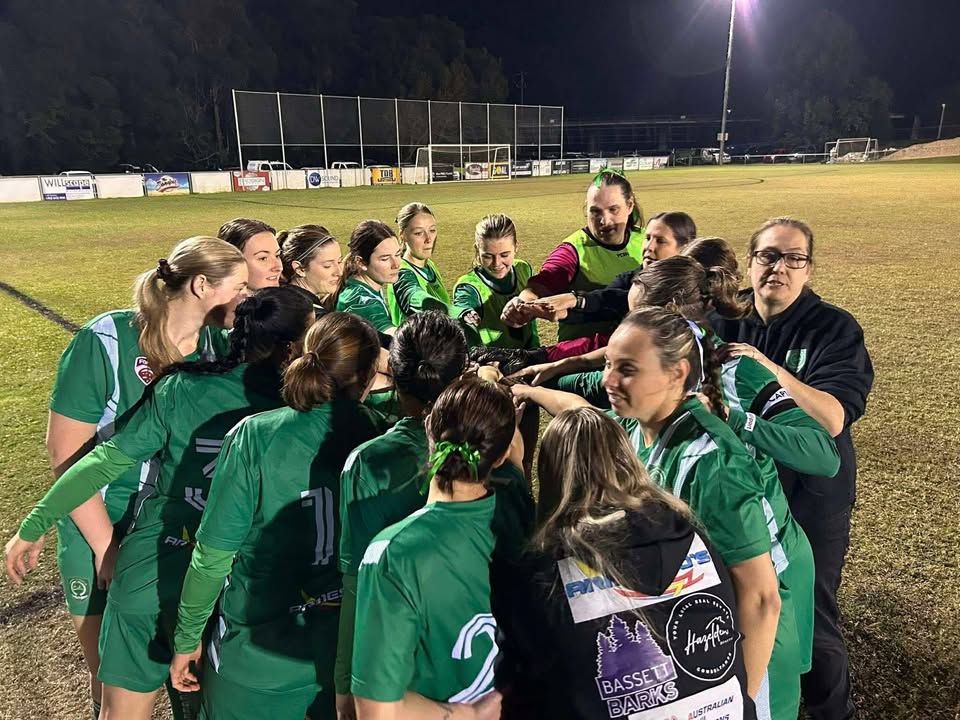
When concerns were raised with the committee, she reported being labelled a “bigot”. The club in question, Beerwah Glasshouse United Football Club (BeeGees), has been publicly recognised for its inclusivity efforts, including being named Club Changer Club of the Month in May 2026. A publicly available team photo from a recent match shows the height and build difference described.
Note: These concerns have been reported by female participants. Women Speak Australia has reproduced them as shared accounts. The club has not been contacted for a response to the specific issues raised in this article.
Dragon Boating
An experienced female dragon boat paddler who has competed at club, state, national, and international levels described similar challenges:
“Whilst we have a category which I would think caters for all identities called the Open category, it is clear… that we have no say when it comes to where trans people can choose to compete and nor are we game to voice our opinion on the fairness.”
She noted that in a sport where female participation actually outweighs males, competitors simply want to “paddle on an equal and fair basis.” At the international level, rules generally require competition based on sex at birth (though terminology sometimes mixes “sex” and “gender”), but national and club-level implementation often differs.
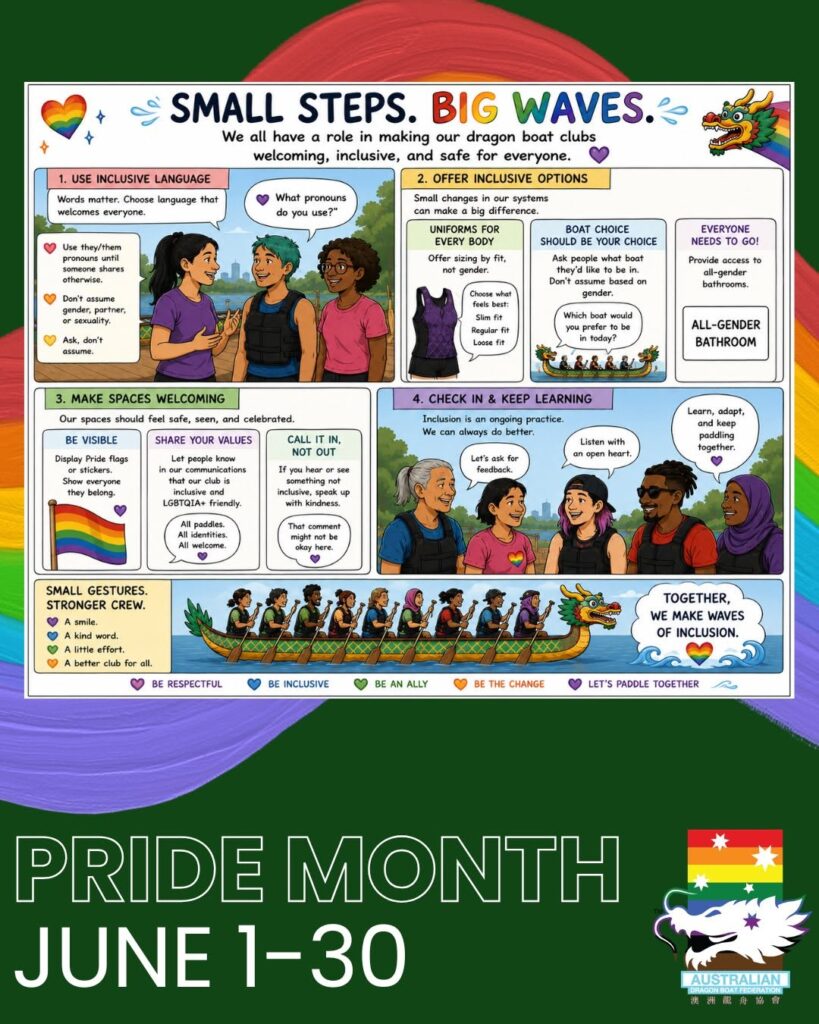
Language and cultural pressures add another layer. The athlete recounted:
“To be told I wasn’t allowed to use any feminine terms in a boat crew in the women’s category because one of the paddlers identified as non-binary does not make for inclusiveness but rather imposes requirements which does not in my mind build resilience in the individual to be accepting of all terms used in the boat.”
She also referenced broader events, such as volunteers at the 2018 Gold Coast Commonwealth Games being instructed to avoid “Ladies and Gentlemen” in favour of fully gender-neutral language.
Conclusion
The legal tools exist, but they are not being used uniformly. Many women raising these concerns are not seeking to exclude trans-identified males from sport altogether. Rather, they are calling for fair and safe categories that reflect biological sex.
Clubs, federations, and policymakers have the legal means to maintain women’s categories where strength, stamina, or physique matter. What is needed is the willingness to apply them consistently. Women’s sport should be for women — and the law already supports that principle.