Children are not small adults. They are developing human beings whose cognitive, emotional, social and physical capacities change substantially as they grow. How children understand themselves and the world around them is therefore influenced by their stage of development, their relationships, their environment and the information available to them.
These developmental realities matter when adults make decisions concerning sex, gender, identity, education, safeguarding and medical treatment.
Children have rights, but children’s rights do not remove the responsibilities of parents, schools, health professionals or the State. The United Nations Convention on the Rights of the Child (CRC) recognises children as individual rights-holders while also recognising the responsibilities of adults to provide appropriate guidance consistent with children’s evolving capacities.
The central principle of this paper is simple:
Children should be heard. Parents should guide. Adults should protect.
This paper considers child development alongside the CRC and contemporary evidence concerning sex, gender and gender-related distress. It does not treat children as passive recipients of adult decisions, nor does it assume that every expressed preference or interpretation by a child must determine the conclusion reached by adults.
How children learn and develop
Children acquire knowledge progressively. Their ability to classify, reason, understand consequences, interpret social information and form an increasingly coherent understanding of themselves develops over time.
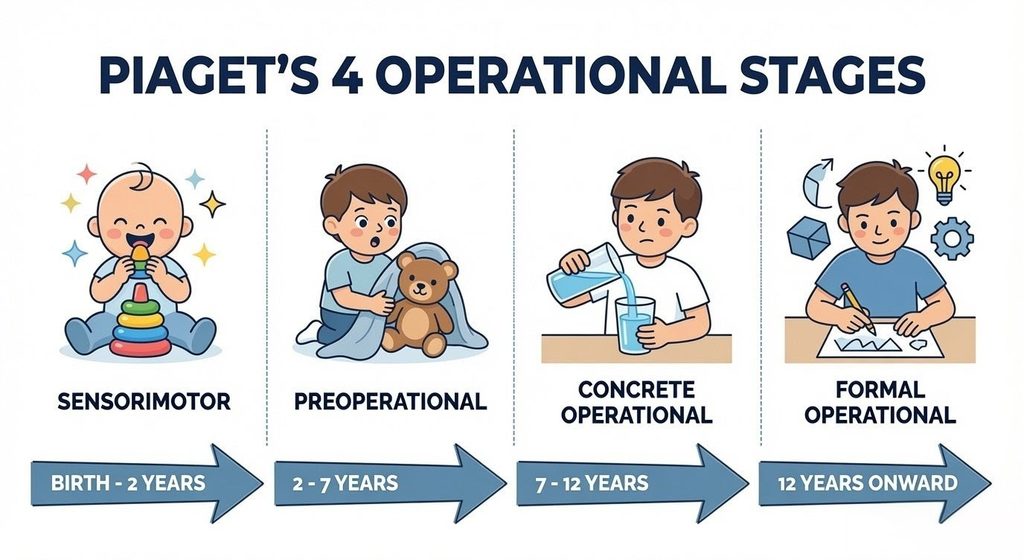
Jean Piaget’s work remains an important foundation in understanding cognitive development. His model described a progression from early sensorimotor learning through preoperational and concrete operational thinking to more abstract reasoning. Modern developmental research has refined and criticised aspects of Piaget’s stage theory, but the broader insight remains useful: children’s ways of understanding the world change as their cognitive capacities develop.
Categorisation is particularly important. Children begin forming categories early, and categorisation assists them in organising their understanding of the world. Research indicates that categories emerge earlier and develop in more complex ways than some earlier accounts suggested.
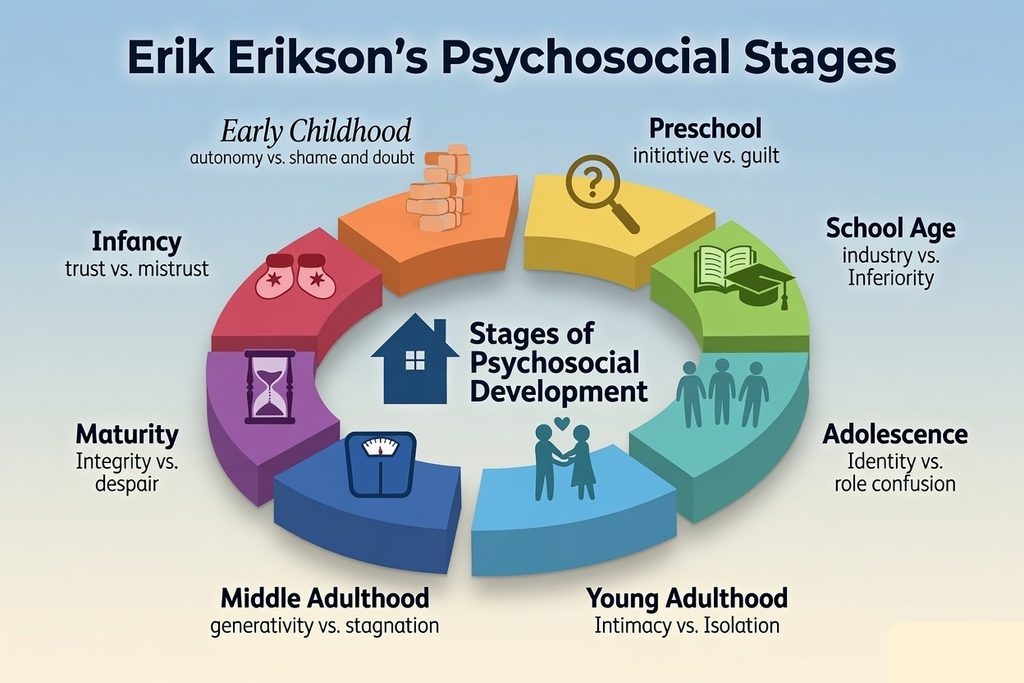
Erik Erikson provides a complementary perspective through psychosocial development. His framework describes developmental tasks involving autonomy, initiative, competence and, later, identity. Contemporary work has retained important aspects of Erikson’s account while also recognising its limitations and incorporating more recent understanding of identity development.
These theories should not be treated as rigid age boxes. Children develop at different rates and in different circumstances. Nor should developmental theory be used to dismiss what children say. Rather, it helps adults understand why a child’s statement, preference or interpretation must be considered within the wider context of the child’s development.
Research into gender development illustrates this point. Young children can recognise and apply gender categories and stereotypes, but those stereotypes are also influenced by the social environment and can be modified. A 2021 systematic review of research involving children aged three to five found evidence that children are aware of and apply gender stereotypes, while also finding evidence of their malleability.
A child therefore needs both room to explore and adults who can help interpret what they encounter.
Sex and gender
It is important to distinguish sex from gender.
The World Health Organization describes sex in terms of biological and physiological characteristics, including chromosomes, hormones and reproductive anatomy. It describes gender as socially constructed characteristics, including norms, behaviours and roles associated with women, men, girls and boys. WHO expressly states that sex and gender are related but different concepts and should not be used interchangeably.
For children, this distinction matters.
A boy who likes dolls, dresses, dancing or playing house does not thereby become female. A girl who dislikes dresses, prefers rough play or has interests traditionally associated with boys does not thereby become male. A child may reject stereotypes without rejecting their biological sex.
Likewise, a child’s feelings about gender, their behaviour, their preferred activities or their understanding of themselves should not automatically be treated as evidence that their biological sex has changed.
This does not mean children should be ignored or ridiculed. Quite the opposite. Children should be able to discuss their feelings and experiences openly, including uncertainty or discomfort about gender expectations. Adults should listen and seek to understand what a child means rather than assuming an answer in advance.
Listening to a child is not the same as accepting every interpretation offered by the child.
What children’s development asks of adults
Children need freedom to explore, but they also need boundaries.
A child-centred approach should not be confused with a child-led approach.
A child-centred approach takes the child seriously. It listens to the child, considers the child’s circumstances and seeks to understand the child’s needs. It does not mean transferring adult responsibility for difficult questions to the child.
The role of an adult is to provide the information, context and guidance that a developing child cannot yet provide for themselves.
This is consistent with the CRC. Article 12 gives children the right to express their views in matters affecting them and requires those views to receive due weight according to the child’s age and maturity. Article 5 expressly recognises the responsibilities, rights and duties of parents to provide appropriate direction and guidance consistent with the child’s evolving capacities.
The two provisions should be read together.
A child can be heard without being made responsible for resolving questions that require adult knowledge, experience and judgement.
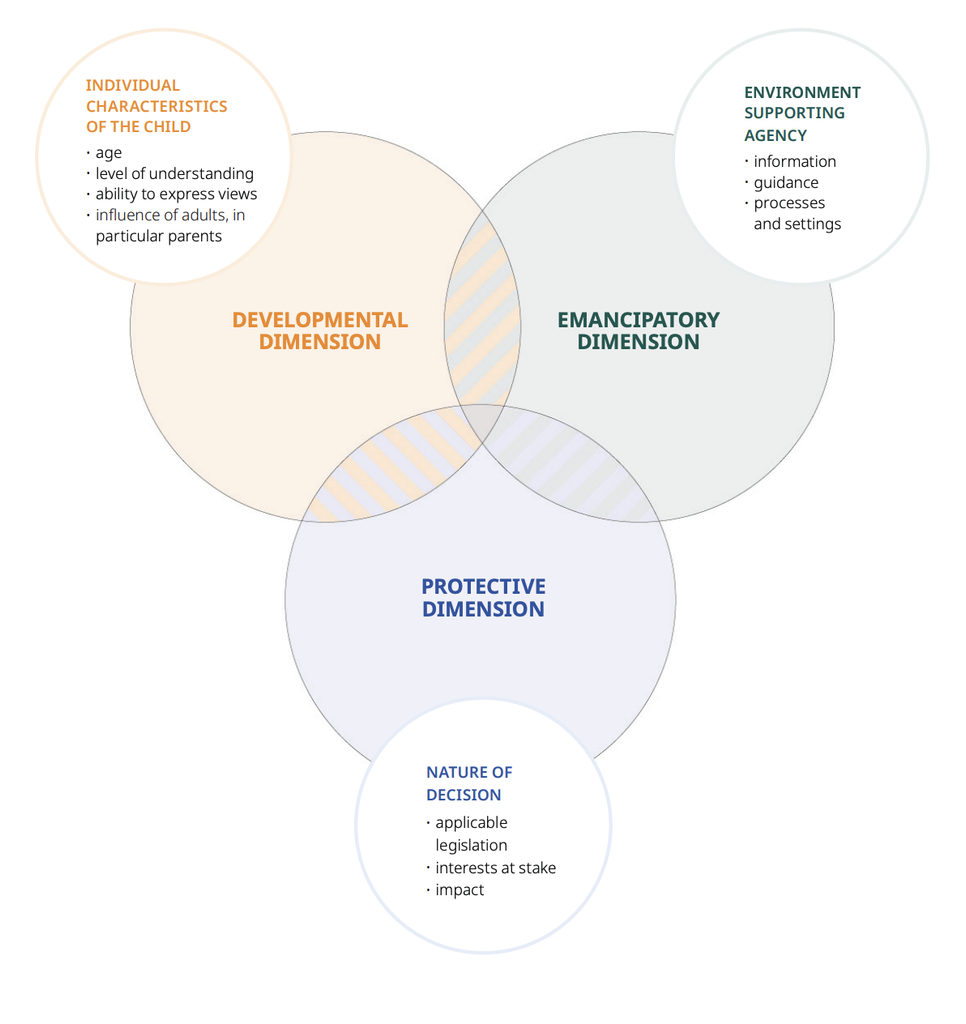
UNICEF’s 2026 Growing with Rights report similarly describes evolving capacities through developmental, protective and emancipatory dimensions. It recognises that children’s growing agency must be supported while also recognising the continuing role of parents and other adults in guiding children as their capacities develop.
This is particularly important when decisions may have consequences beyond the child’s immediate experience.
A child may reasonably be allowed to choose clothes, hairstyles, toys or hobbies. A child expressing distress about their body or sex deserves to be listened to and supported. But the existence of a child’s preference does not, by itself, answer questions about long-term health, development or medical treatment.
The adult responsibility is to understand the child, provide appropriate information, consider the evidence and consequences, and establish boundaries where necessary to protect the child.
The purpose of parental guidance is not to silence children. It is to help children develop the knowledge, confidence and capacity to exercise their rights safely.
Schools, children and parental responsibility
Schools have important responsibilities towards children. They educate, provide social environments and have duties concerning safety and wellbeing.
They should not, however, be treated as substitutes for parents.
Parents generally have longitudinal knowledge of their child’s development, health, behaviour, family circumstances and history that a school cannot replicate. This information can be important when a child is experiencing distress or making significant decisions.
There are circumstances in which schools must act independently to protect a child, particularly where there are concerns about abuse, neglect or immediate safety. That does not mean that schools should ordinarily displace parents from significant decisions concerning their child’s identity, health or welfare.
Victoria provides a direct example of why this boundary matters. The Department of Education states that there may be circumstances in which a student undertakes gender transition without parental consent and/or without consulting medical practitioners. Where agreement cannot be reached between a student and parents, the school may consider whether the student is a mature minor. If the student is considered a mature minor, the policy states that the student can make decisions for themselves without parental consent and should be affirmed in their gender identity at school without a family representative or carer participating in formulation of the school management plan.
Excluding parents from a child’s social transition is not a small administrative decision. The Cass Review found that there is no clear evidence that social transition in childhood has positive or negative mental-health outcomes, and relatively weak evidence in adolescents. It also concluded that social transition in childhood may change the trajectory of gender-identity development for children with early gender incongruence. For children, the Review recommended that parents seek clinical help and advice and that clinical involvement should inform decisions about social transition.
This is therefore not simply a question about a child’s preferred name or clothing. It concerns how adults respond to a developing child and whether significant decisions are being made with adequate information, clinical input and parental involvement.
Safeguarding children
Safeguarding is not simply a response to harm after it occurs. It includes identifying foreseeable risks and establishing environments, policies and practices that reduce the likelihood of harm.
Children need privacy, dignity and physical safety. Sex can be relevant to these considerations.
This includes appropriate consideration of single-sex facilities where privacy, safety or dignity requires sex separation, and the maintenance of fair and safe sporting arrangements where physical differences between males and females are relevant.
It also includes accurate records. Schools and other institutions should distinguish between biological sex, gender expression and other concepts rather than allowing these categories to become confused in ways that affect safeguarding, data or decision-making.
Children should be protected from bullying and harassment. At the same time, protection from bullying does not require adults to abandon accurate information about sex or to treat every gendered preference or feeling as evidence that biological sex has changed.
Safeguarding should begin with the child’s actual circumstances, developmental stage and foreseeable risks, rather than with an assumption that one response is appropriate for every child.
Medical treatment and gender-related distress
Children experiencing gender-related distress should be listened to and supported. A child who says, “I don’t feel like a girl,” should be able to say so without ridicule. An adult can ask what that means, what is frightening, and what else may be happening in the child’s life.
Listening is not a diagnosis, and it is not a treatment plan.
The CRC recognises the child’s right to survival and development and to the highest attainable standard of health. It does not create a right to a particular drug, procedure or medical pathway. Articles 6 and 24 must be considered alongside the Convention’s broader obligations concerning the child’s development, best interests and parental guidance.
Where long-term evidence is uncertain, the cautious course is to support the child while the picture develops: psychological and social support where appropriate, attention to other difficulties, careful assessment and continued review. This is active waiting. It is not neglect.
The Cass Review identified significant gaps and uncertainty in the evidence base, while Australia’s NHMRC is currently undertaking its own national guideline process. NHMRC’s interim advice on puberty suppression is expected to go to public consultation in late 2026.
Until the evidence is clearer, care should follow the child rather than a predetermined pathway. Children should be supported, assessed and protected while irreversible or partly irreversible decisions are approached with particular caution.
WSA position
Women Speak Australia considers the following principles important when policy and practice concern children, sex and gender:
- Children should be recognised as developing human beings. Their cognitive, emotional, social and physical development should inform decisions made about them.
- Children have the right to be heard. Their views should be taken seriously and given appropriate weight according to their age, maturity and evolving capacities.
- Parents have an important role in guiding and protecting their children. Parental responsibilities should not be displaced without a clear and compelling reason grounded in the child’s welfare and legal obligations.
- Sex and gender should not be treated as interchangeable concepts. Children should be able to understand biological sex without being confined by gender stereotypes.
- Schools should support children while respecting the proper boundaries between education, parental responsibility and medical decision-making.
- Safeguarding should be based on the child’s actual circumstances and foreseeable risks. Sex, privacy, physical safety and accurate information can all be relevant to safeguarding.
- Medical treatment of children requires a high standard of evidence and careful consideration of uncertainty. The potential permanence or partial reversibility of interventions makes careful assessment particularly important.
- Where evidence is uncertain, support and assessment should continue while irreversible decisions are approached cautiously.
- A child’s right to be heard should not be turned into a responsibility to make adult decisions.
Conclusion
Children develop over time. Their capacity to understand themselves, other people and the consequences of decisions develops with them.
Respecting children means listening to them, taking their experiences seriously and giving appropriate weight to their views. It also means recognising that children need adults who can provide information, context, boundaries and protection.
The CRC does not require a choice between children’s rights and parental responsibility. Its framework recognises both the child’s developing agency and the responsibilities of adults to provide appropriate guidance consistent with evolving capacities.
The same principle should guide questions surrounding sex and gender.
Listen. Understand. Guide. Protect.
A child should be able to ask questions, express uncertainty, reject stereotypes and talk about distress without fear. Adults should be able to listen without prematurely closing down inquiry, while also retaining responsibility for safeguarding, evidence-based decision-making and the child’s long-term welfare.
Children should be heard. Parents should guide. Adults should protect.