“A mother is a school. When society invests in it and supports mothers, it builds a nation of noble character.”
— Hafez Ibrahim (Egyptian poet)
Introduction
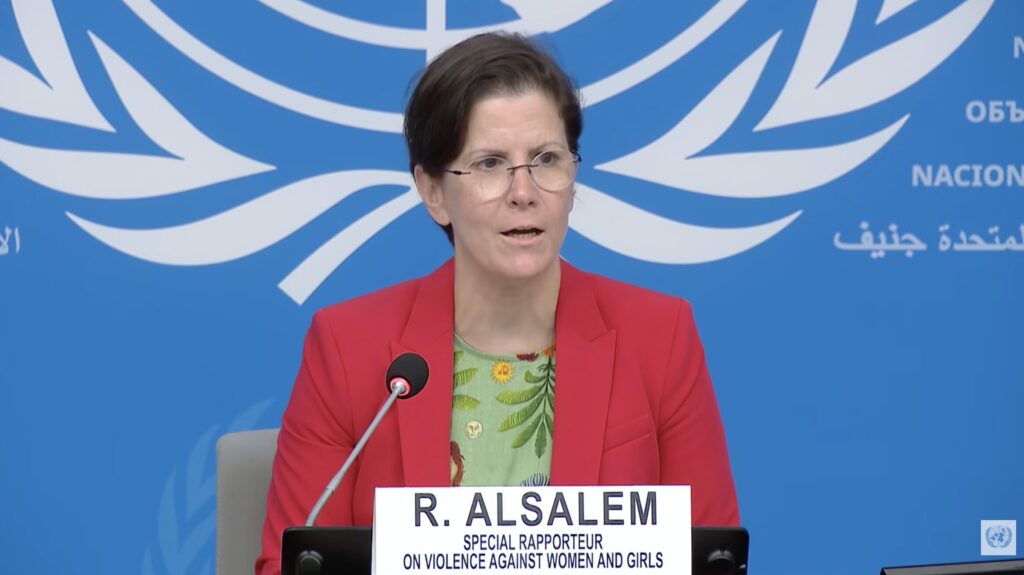
In June 2026, the United Nations Special Rapporteur on violence against women and girls, Reem Alsalem, presented her thematic report Violence against Mothers (A/HRC/62/49) to the Human Rights Council. This is the first report under the mandate dedicated exclusively to the violence and discrimination experienced by women and girls because they are mothers.
The report examines how mothers face distinct harms across healthcare, employment, family law, public policy and humanitarian settings. It argues that motherhood has become largely invisible within international human rights frameworks and calls for greater legal recognition of mothers as a distinct rights-holding group. Drawing on 167 submissions, consultations with approximately 60 experts and existing research, the report identifies structural causes of violence against mothers and sets out recommendations for improved legal protections, public policy and data collection.
While the report addresses a wide range of international contexts, several findings are directly relevant to contemporary debates on sex-based language, maternity protections, surrogacy, family law and the protection of the mother-child relationship.
Summary
The Special Rapporteur presents violence against mothers as a distinct human rights issue arising from the intersection of women’s biological reproductive capacity and the social realities of motherhood. Existing frameworks often address violence against women in general while overlooking harms that arise specifically because women become mothers. This “mother-blind” approach obscures the particular vulnerabilities associated with pregnancy, childbirth, breastfeeding and caring for children.
In presenting her findings, the Special Rapporteur identified the broader social devaluation of motherhood as a significant contributing factor:
“There is an overall and concerning devaluation of motherhood by governments, but also by wider society. It is often felt that motherhood is a setback — that if you are interested in becoming a mother, this is something that will inhibit you or restrain you from advancing in life.
This sacred mother-child relationship is rarely ever recognised: the fact that it changes the two persons involved — the mother and the child — biologically, physically, and psychologically in very profound ways.”
— Reem Alsalem, UN Special Rapporteur on violence against women and girls
The report grounds its analysis in biological reality. Pregnancy, childbirth and lactation are recognised as sex-specific experiences that create unique health needs and legal protections. The Special Rapporteur expresses concern that replacing established terms such as “mother” or “breastfeeding” with gender-neutral language—including “birth giver” or “chestfeeding”—can diminish the visibility of mothers in healthcare, research and public policy.
Strengths of the Report
1. Recognition of mothers as a distinct rights-holding group
The report’s most significant contribution is its clear identification of mothers as a distinct category requiring specific legal, social and policy protections. While international human rights law has long addressed the rights of women and children separately, mothers themselves have remained largely invisible. By framing motherhood as a unique status that generates forms of violence and discrimination not experienced by women who are not mothers, the report provides a coherent human-rights framework for analysing harms linked specifically to pregnancy, childbirth, breastfeeding and caregiving.
2. Recognition of biological reality
Throughout the document, pregnancy, childbirth, lactation and breastfeeding are described accurately as experiences unique to women. The report argues that these biological realities have practical consequences for healthcare, employment, legal protections and public policy. It criticises the growing use of “mother-blind” language, including terms such as “birth giver” and “chestfeeding,” and maintains that replacing established terminology with gender-neutral alternatives can make mothers less visible and reduce the ability of institutions to identify and respond to their specific needs. This recognition that language has concrete legal and policy consequences is one of the report’s most significant contributions.
3. A comprehensive human-rights approach
Rather than focusing solely on domestic or intimate-partner violence, the report examines economic violence, reproductive and obstetric violence, psychological abuse, institutional discrimination, workplace disadvantage, legal barriers and cultural practices that disproportionately affect mothers. This broader lens demonstrates that harm often arises through structural and institutional systems, not only through individual perpetrators.
4. Recognition of the mother–child relationship
The report consistently emphasises the biological, psychological and developmental significance of the mother-child relationship. It notes that violence directed at mothers frequently has adverse consequences for children and that the relationship itself can be weaponised as a form of coercive control, including in family-law disputes. By linking the protection of mothers to the protection of children, the report offers a more integrated understanding of family wellbeing than is often reflected in public policy.
5. Recognition of emerging forms of institutional harm
The report identifies mothers who oppose harmful practices involving their children—including female genital mutilation and certain gender-transition interventions—as a group that may face adverse institutional consequences, including the risk of losing custody. Although the discussion is brief and does not recommend specific reforms, the inclusion is noteworthy: it acknowledges that public institutions and legal systems can themselves become sources of discrimination against protective mothers. This concern also reflects broader historical experiences where state and institutional decisions have resulted in the separation of children from their mothers, including the removal of children from single mothers and other vulnerable women in Australia. These examples highlight the importance of ensuring that systems designed to protect children do not unintentionally harm the mother-child relationship or disadvantage mothers seeking to advocate for the wellbeing of their children.
Key Limitations and Caveats
The Special Rapporteur acknowledges significant gaps in data. Many jurisdictions do not collect statistics that identify mothers as a distinct category, aggregating information instead under broader headings such as “women,” “families” or “parents.” The report therefore relies on submissions, expert consultations, academic literature and case studies. Further high-quality longitudinal research would strengthen the evidence base.
The report draws examples from widely differing legal systems, cultural contexts and levels of economic development. Not all findings transfer directly to Australia. Conflict-related reproductive violence, child marriage or severe deficiencies in maternal healthcare, for example, occur in settings that differ substantially from Australia’s legal and healthcare systems. Australian policymakers should focus on the report’s broader human-rights principles while recognising differences in prevalence and context.
Many recommendations establish general principles rather than detailed legislative prescriptions. Implementation will depend on national legal frameworks, healthcare systems and the division of responsibilities between the Commonwealth, states and territories. The report should be treated as a human-rights framework to guide policy development rather than a blueprint for reform.
Although the report notes that some mothers face institutional pressure or custody risks for opposing certain practices involving their children, including gender-transition interventions, it does not examine these issues in depth. Similarly, while it criticises the erosion of sex-specific language, it does not comprehensively address broader debates on gender-identity legislation or self-identification policies. These matters fall outside the report’s primary scope.
Mothers are not a homogeneous group. Experiences vary by age, disability, socioeconomic status, ethnicity, migration status and family structure. Effective policy requires both universal protections and targeted measures addressing particular vulnerabilities.
Practical Implications for Policymakers
Recognise mothers as a distinct policy category
Public policy frequently treats mothers simply as women or parents. Explicit recognition of mothers as a distinct category would improve the design of legislation, healthcare policy and government programs by ensuring maternal experiences are considered rather than assumed.
Preserve accurate sex-based language
Accurate terminology is fundamental to effective law, healthcare and data collection. Governments should ensure that legislation, health services, education materials and official statistics continue to use terms that reflect biological reality.
Improve data collection
Sex-disaggregated and mother-specific data should be collected across healthcare, family law, employment and violence prevention. Better evidence would enable policymakers to identify trends, evaluate programs and develop targeted responses.
Strengthen maternal healthcare
Pregnancy, childbirth and the postnatal period remain times of heightened vulnerability. Policy should prioritise high-quality maternity care, informed consent, respectful obstetric practice and access to appropriate mental-health support.
Address economic disadvantage associated with motherhood
Policies that support family-friendly workplaces, adequate maternity protections, flexible employment and recognition of unpaid care work can reduce the long-term economic penalties many mothers face.
Protect the mother–child relationship
Family law, child-protection systems and related institutions should ensure that decisions affecting children appropriately recognise the importance of maintaining safe maternal relationships while acting in the best interests of the child.
Conclusions
The Special Rapporteur’s report makes a significant contribution to international human rights discourse by recognising mothers as a distinct rights-holding group and by grounding its analysis in the biological realities of pregnancy, childbirth and breastfeeding. It broadens understanding of violence against mothers beyond interpersonal abuse to include economic disadvantage, institutional discrimination, reproductive coercion and legal systems that fail to acknowledge maternal needs.
Although evidence gaps remain and not every finding applies equally across jurisdictions, the central conclusion is clear and well-supported: motherhood gives rise to distinct biological, social and legal realities that require explicit recognition within human rights law and public policy. Mothers should no longer remain invisible in policy development. Effective protection of women’s rights depends on legal frameworks that respond accurately to the unique experiences and vulnerabilities associated with motherhood.