During a recent question-and-answer session at Manchester University, former Australian Prime Minister Julia Gillard was asked about her government’s 2013 amendments to the Sex Discrimination Act. Those amendments removed the Act’s biological definitions of “man” and “woman” and added “gender identity” as a protected attribute.
Gillard responded that the issues now being debated were not raised at the time because they were not then part of public discourse in the way they are today. She described it as “a different time.”
It is true that public discussion of the interaction between gender identity protections and women’s single-sex spaces was far more limited in 2012–13 than it is now. However, the documentary record shows that some of the potential conflicts were identified during the policy and legislative process itself.
The Policy Background: The 2009 Sex Files Report
The policy direction for the 2013 amendments was significantly influenced by the Australian Human Rights Commission’s 2009 Sex Files report, the concluding paper of its Sex and Gender Diversity Project.
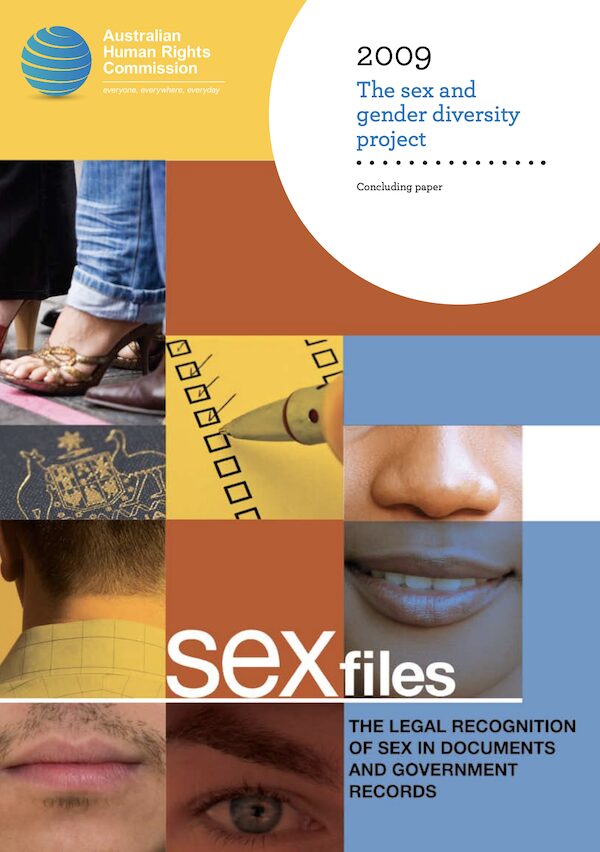
The report acknowledged that there was “no consensus about the definition of sex or gender” across legal, social, medical and scientific frameworks. Despite this, it recommended greater recognition of self-identified sex and gender and drew on frameworks such as the Yogyakarta Principles.
The consultation process focused heavily on the experiences of sex and gender diverse communities. There is comparatively little discussion in the report of how the proposed reforms might affect women’s sex-based rights or create conflicts between competing protected interests. This identity-focused approach helped shape the policy environment that preceded the amendments.
The 2013 Legislative Process
When the Gillard Government introduced the Sex Discrimination Amendment (Sexual Orientation, Gender Identity and Intersex Status) Bill 2013, the legislation proceeded through Parliament with relatively limited public attention compared with the significance of the changes being proposed.
A Freedom of Information request by the Affiliation of Australian Women’s Advocacy Alliances (AAWAA) later revealed that the Office for Women held no records relating to advice, briefings, or consultations on the proposed amendments. Responsibility for the reforms appears to have rested primarily with the Attorney-General’s Department.
Most importantly, the possibility that gender identity protections could affect female-only spaces was expressly contemplated.

The Senate Legal and Constitutional Affairs Legislation Committee recorded evidence from the Attorney-General’s Department at paragraph 3.37 of its report:
“Exclusion of a trans woman from a female-only club could constitute gender identity discrimination. The department considers the current drafting will achieve this intention.”
This statement demonstrates that one of the core tensions now visible in public debate was identified during the legislative process. At the same time, the Explanatory Memorandum confirmed that the amendments would remove the Act’s existing statutory definitions of “man” and “woman.”
Supporters of the reforms argued they were necessary to strengthen anti-discrimination protections. Others warned of potential conflicts with sex-based rights. The parliamentary record shows that at least some of those concerns were noted at the time.
Present-Day Consequences
More than a decade later, many of the questions that were once largely theoretical have become practical legal and institutional disputes. Cases concerning female-only apps, sports, services and associations have tested the interaction between sex and gender identity under the amended Act.
Recent attempts in the Senate to introduce bills seeking to restore biological definitions of sex and strengthen protections for female-only spaces did not proceed. Women’s advocates have argued that the practical consequences of the 2013 reforms are now sufficiently clear to warrant renewed parliamentary consideration.
The Need for Open Reconsideration
The strongest response to the claim that these issues simply could not have been anticipated is the documentary record itself. While the scale of today’s debate was not foreseen, the possibility of conflict between gender identity protections and female-only spaces was identified by the department responsible for the legislation.
Whether the balance struck in 2013 was the right one remains a matter of legitimate disagreement. What is no longer in dispute is that the consequences of those reforms are now being tested in courts, sporting bodies, public institutions and the wider community.
A mature democracy should be willing to revisit legislation when experience reveals unresolved tensions or inadequate safeguards. The legal relationship between sex-based rights and gender identity protections deserves careful, evidence-based public discussion.
Women Speak Australia supports open examination of these questions with the aim of ensuring that the law provides clear and workable protections for the sex-based rights of women and girls, including the ability to maintain female-only spaces and services where needed.