During her recent address to the National Press Club, Senator Pauline Hanson raised a range of national issues, including migration, housing, energy policy and government administration. A significant portion of her speech focused on gender identity policies and their impact on women’s rights, single-sex spaces and public institutions.
Hanson argued that gender identity ideology has become embedded across government agencies, regulatory authorities, workplaces, schools and other public institutions. She stated that she is not opposed to transgender people themselves, but opposes policies that allow biological males to compete in women’s sport or access women’s changing rooms and other single-sex spaces.
Institutional Concerns
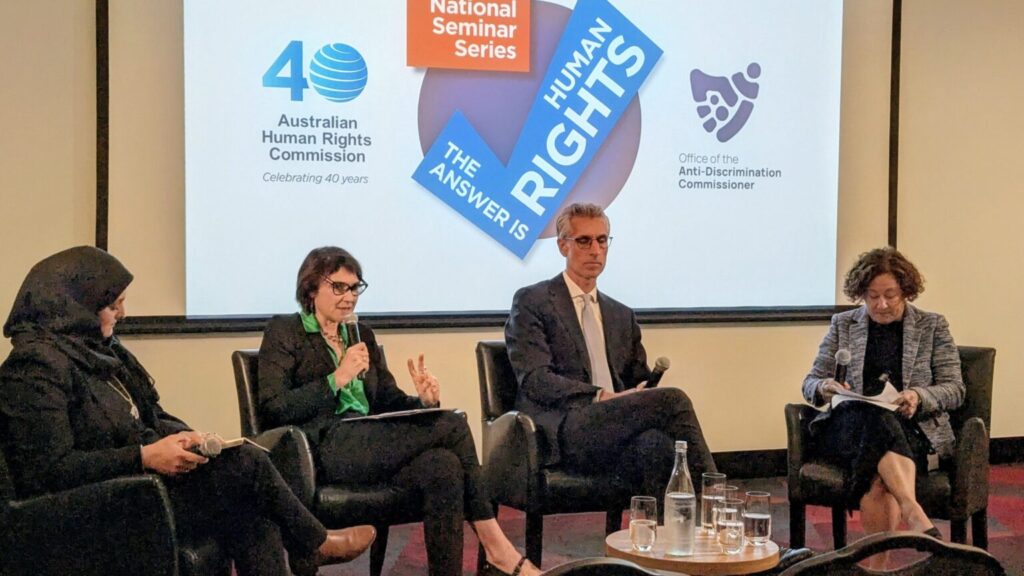
As part of her remarks, Hanson called for the removal of Sex Discrimination Commissioner Dr Anna Cody and Australian Human Rights Commission President Hugh de Kretser. She accused both of supporting policies that prioritise gender identity over biological sex.
She argued that many public institutions have become reluctant to acknowledge the biological reality of sex and criticised the role played by government agencies, regulatory authorities and publicly funded bodies in advancing gender identity policies.
Referencing Germaine Greer
Hanson also referenced comments made by feminist writer Germaine Greer, noting that Greer has long maintained that sex is rooted in biological reality and cannot be changed through medical intervention.
Quoting one of Greer’s most widely cited remarks, Hanson stated:
“Just because you lop off your penis and then wear a dress, doesn’t make you a woman.”
She used the quotation to support her argument that sex is fundamentally linked to the body and should remain the basis for laws, policies, and sex-segregated spaces.
Workplace Programs
The senator specifically criticised the AIDS Council of NSW (ACON), describing it as a leading advocate for transgender ideology in Australia.
She pointed to ACON’s administration of the Australian Workplace Equity Index, a benchmarking program used by corporations, government agencies, and other organisations to assess workplace inclusion policies.
According to Hanson, the widespread adoption of such programs demonstrates the extent to which gender identity ideology has become embedded throughout Australian institutions.

Stronger Language Used
In one of the more strongly worded sections of the speech, Hanson characterised the transgender movement as a “militant force right throughout society” and compared its influence to that of “militant Islam.”
She argued that gender identity ideology had become embedded in areas of public life largely unseen by ordinary Australians and described it as “explicitly subversive.”
Policy Context
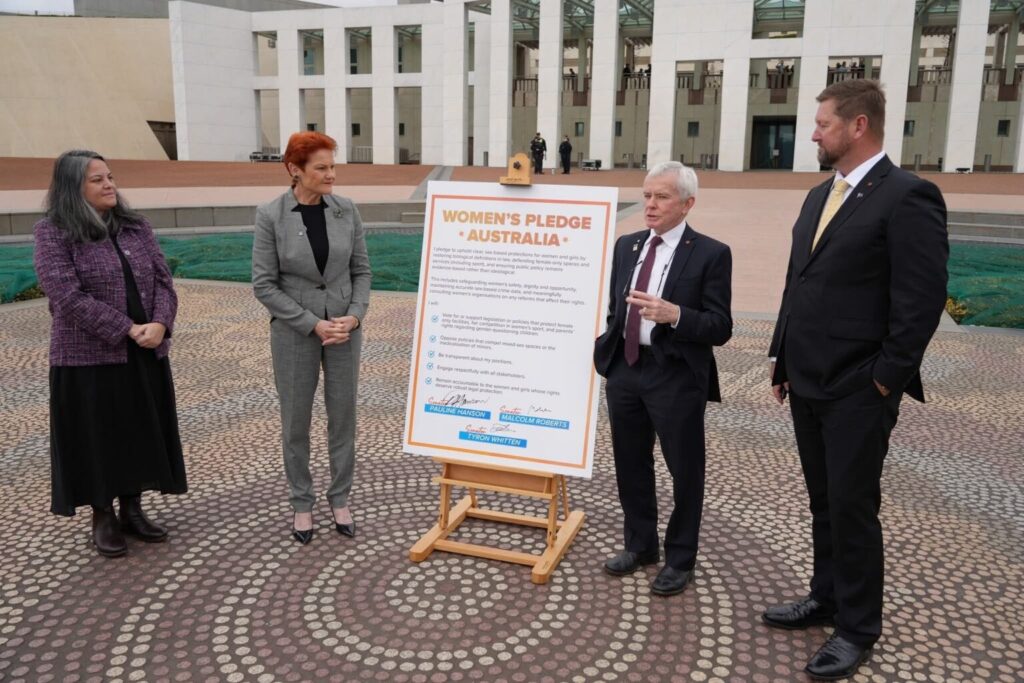
Several One Nation senators have signed the Women’s Pledge Australia, which commits signatories to protecting women’s sex-based rights, single-sex spaces, fair sporting categories, and safeguarding measures for children and young people. Hanson’s comments at the National Press Club align with those policy positions.
Women Speak Australia notes that the underlying issues raised — the recognition of biological sex in law and policy, the protection of single-sex spaces and sport, and the safeguarding of children — remain matters of significant public interest. These questions continue to be debated in Australia and internationally.
Public Significance
Hanson’s National Press Club address is one of the more direct statements from a federal parliamentarian on the tension between gender identity policies and sex-based rights. Debates over women’s sport, single-sex spaces, freedom of expression and child safeguarding are likely to remain part of the national conversation.
Women Speak Australia continues to advocate for the recognition of biological sex in law and public policy, the protection of women’s single-sex spaces and services, and evidence-based approaches to the care of children and young people, independent of any political party.